
The world of cable is, at best, convoluted and, at worst, a massive can of writhing, slippery worms. It’s full of obscure acronyms and complicated standards, so it’s not surprising that, over time, a number of misconceptions have woven their way into the fabric of this vitally important sector of the construction industry.
Probably the one I hear most often is:
‘If it’s not BASEC approved, you can’t use it!’
We’ve all heard this one, or something remarkably similar, but is it really that black & white? Before we continue with this topic, let me say very clearly I have the utmost respect for everything the BASEC Group Ltd do for our industry. I’ve had the pleasure of working closely with a number of their extremely knowledgeable people over the years and know 1st hand the advice they give is always sound, impartial and comes from a deeply entrenched desire to make the UK cable industry as safe as possible. But despite their expertise and unquestionable good intentions, my initial question remains – Can it really be the case that only products third party tested by BASEC are safe to use in the UK?
What is BASEC approval?
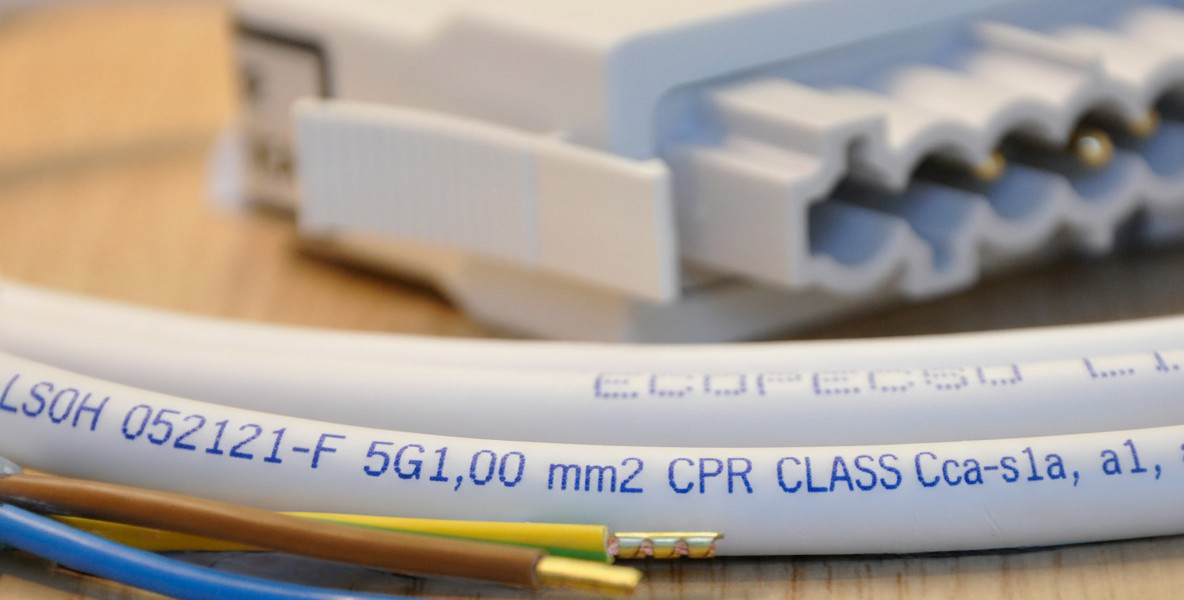
A BASEC Approved cable has been tested by BASEC (you can rely on me to state the obvious) to ensure it complies with the standards the manufacturer claims. As part of the approval process BASEC will also have audited the manufacturer and their facilities to ensure best practice is being employed. All good stuff, and a great seal of approval from a renowned 3rd party. However, does that then mean a manufacturer that chooses not to have their products tested by BASEC is a bit ‘dodgy’? Are their products unsafe by default just because BASEC haven’t run the rule over them? Their claims of compliance not worth the paper the standards are written on? It’s quite a broad, cynical brush with which to paint a good percentage of the world’s cable producers.
Why is all cable not BASEC approved?
And what if BASEC has never been asked to test and approve the type of cable that best suits an application. For example, BS EN 50525-1:2011+A1:2022 is the British and European umbrella standard for harmonised cables up to 450/750 V. Linked to this overarching standard there are currently 17 individual standards covering a whole raft of cable types – from single core to flexibles to steel wire armour and the varying polymers used for conductor insulation, outer sheath material etc. Out of those 17 standards, only 5 are listed as having BASEC Approved products against them. That’s not anyone’s fault, certainly not BASEC’s, it’s simply that no products in accordance with those standards are BASEC Approved – perhaps none have ever been submitted to BASEC for testing. That can’t mean cables manufactured to any of those 17 standards cannot be used, can it? If it does, then on a commercial level what’s the point of producing them if they can’t be bought and installed? Remember, we’re talking about British/European Norm. standards here, not obscure legislation from some far-flung country.
Foreign Bodies
What about BASEC’s overseas peers? I mean, we’re good in this country, right, but let’s not kid ourselves into thinking the UK’s alone in the world in wanting to ensure cables are safe to install. I’m fairly sure the USA don’t allow their sparkies to install wet string while we Brits insist on copper. Italy has a big cable manufacturing industry, so it shouldn’t really be a surprise that it has an equivalent body to BASEC – IMQ (Italian Institute of the Mark of Quality). Cables manufactured in Italy are often marked with the letters IEMMEQU on the outer sheath, much the same as the sheath of a BASEC Approved cable is marked BASEC. Turkey similarly is a large producer of cable and their approval body is TSE (Turkish Standards Institute). BASEC, IMQ, TSE (and other governing bodies) often collaborate and consider each other equals when it comes to assessment and approvals.
The more information, the better
To summarise, if a cable is BASEC Approved you can be pretty sure that, as a minimum, it meets the necessary standards and the manufacturer is a reputable operator, but the lack of the BASEC mark doesn’t automatically mean the product, or indeed its manufacturer, is suspect. Don’t dismiss out of hand similar European marks on the assumption they’re inferior, meaningless even.
Of course, the more information available to you the more confident you can be in your cable choice so it’s in the manufacturer’s best interest to provide you with as much as possible. That said, much of the information you would think should be readily visible i.e. printed/embossed directly on the cable, can quite legitimately be somewhere else – on the coil/drum, on a data sheet, even inside the cable itself
Ultimately, due diligence and research is key to making the right cable choice for a given application. Most important of all, don’t be tempted to chase the cheap deal because that could literally result in burnt fingers………. for someone.
Related Posts

Myth – CPR is no longer important
The requirement for cables to be CPR tested, classified and certified became mandatory in the UK in July 2017, and that legal requirement remains in place today.

Myth – LSF and LSHF Cable are the same thing
The world of cable is, at best, convoluted and, at worst, a massive can of writhing, slippery worms. It’s full of obscure acronyms and complicated standards, so it’s not surprising that, over time, a number of misconceptions have woven their way into the fabric of this vitally important sector of the construction industry. Part 2 in our series of cable myths focuses on LSF and LSHF and if it really matters which you use.
Myth – Cable needs to be BASEC approved
The world of cable is, at best, convoluted and, at worst, a massive can of writhing, slippery worms. It’s full of obscure acronyms and complicated standards, so it’s not surprising that, over time, a number of misconceptions have woven their way into the fabric of this vitally important sector of the construction industry. Probably the one I hear most often is: 'if it's not BASEC approved you can't use it'
Building Safety Act? Construction Products Directive? There are many standards that apply and a third party check is the gold standard. What is the goal of the ariticle ? Are you advocating a move away from approved cables?
Hi David,
Thanks for your comment.
If I can answer your last point first: Absolutely not! The aim was to highlight that not every type of cable manufactured, and by type I mean a product manufactured to a certain British or European standard, has BASEC Approval.
Fore example. BS EN 50525-1:2011+A1:2022, the British and European Norm for low voltage energy cables, consists of 18 individual standards but only 5 of those 18 have products listed against them on the BASEC website. Therefore, if an application dictates that a product manufactured to one of those other 15 standards is required it’s impossible to put one forward with BASEC Approval because none exist.
You also mention safety and the Construction Products Regulation (CPR) in relation to cable selection, so please look out for further articles from flex7 on these exact topics.
Thank you for the reply.